
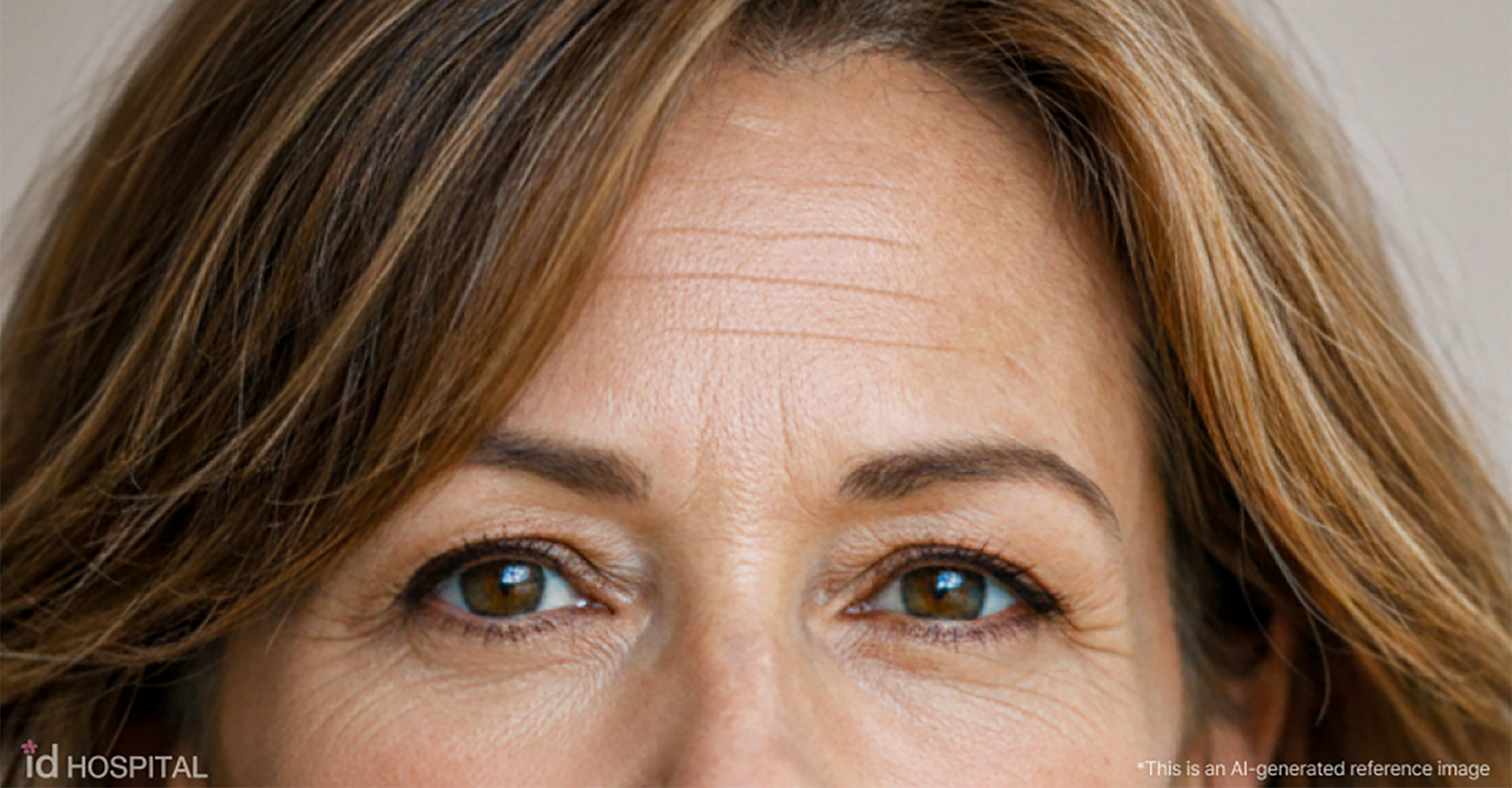
When Upper Eyelid Surgery Doesn’t Fully Improve a Tired Look
Patients with hooded eyes or heavy upper eyelids often consider upper blepharoplasty as the primary solution for a tired or aged appearance.
Upper blepharoplasty is a surgical procedure that removes or reshapes excess skin and soft tissue of the upper eyelids to improve eye openness and reduce heaviness.
However, droopy or hooded eyelids are not always caused by the eyelids alone.
In many cases, the true underlying issue is descent of the eyebrows and forehead soft tissues, which continue to place downward pressure on the upper eyelids—even after eyelid surgery.
When this structural factor is not addressed, upper blepharoplasty alone may lead to limited improvement or recurrence of eyelid drooping over time.
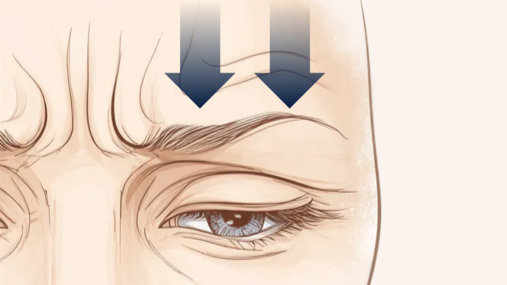
That’s why many patients benefit from a more comprehensive approach—one we call the id Hooded Eye Lift: an integrated correction of the eye–brow–forehead unit, rather than the eyelids alone.
In this article, we explain:
When upper blepharoplasty alone may not be sufficient
Which patients benefit from considering a forehead lift together
How a hooded eye lift approach leads to more stable, natural-looking results for hooded and droopy eyes by addressing the underlying cause.
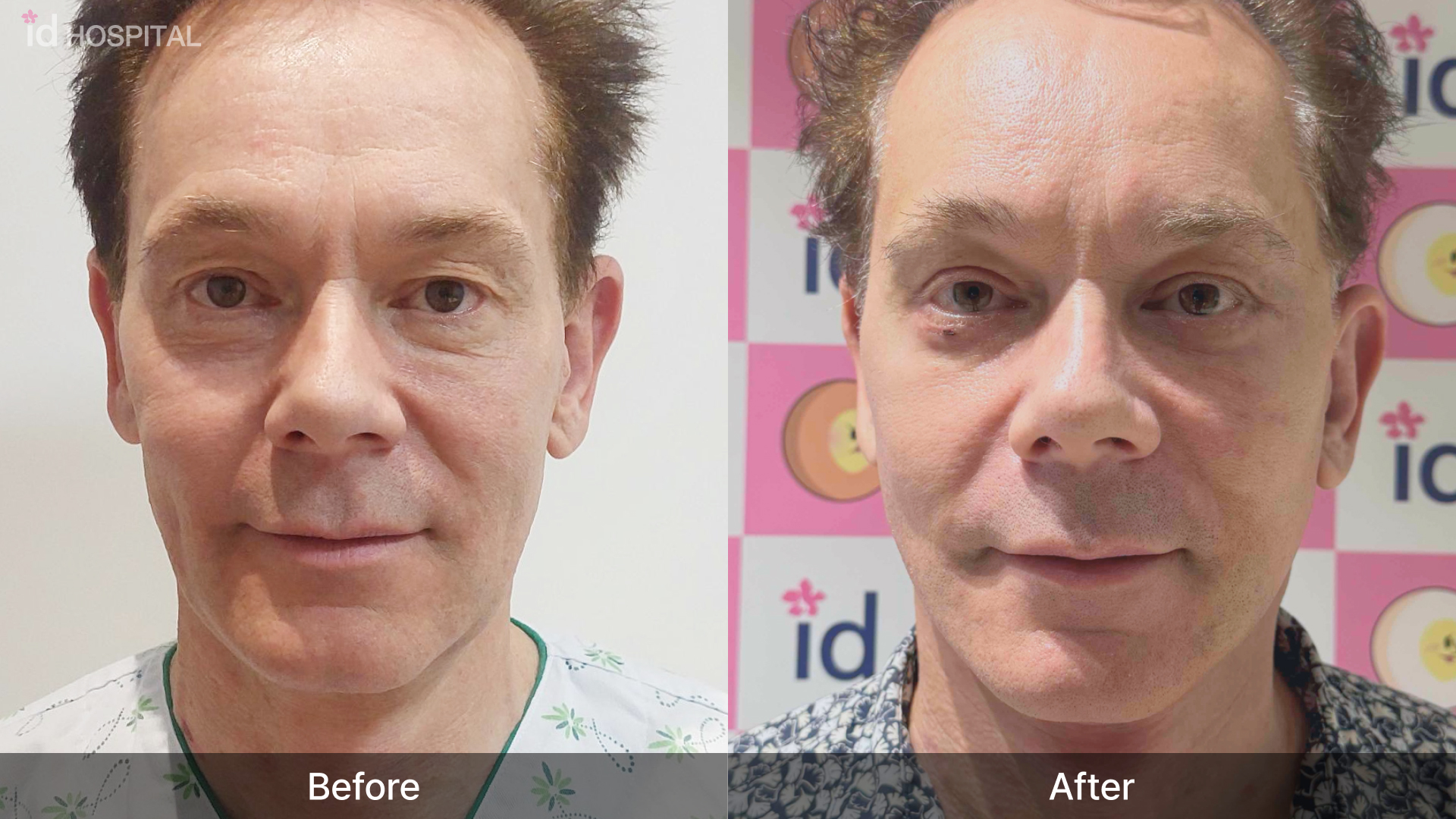
When Is Upper Blepharoplasty Alone Not Enough?
(droopy eyes / downturned eyes / ptosis – including younger patients)
1. Tired-looking eyes despite minimal excess eyelid skin
Some patients have droopy or hooded eyelids despite having very little excess upper eyelid skin.
In these cases, low-positioned eyebrows (brow ptosis) continue to push downward on the eyelids, limiting the effectiveness of upper blepharoplasty alone.
→ Restoring eyebrow position through a forehead lift allows for minimal eyelid skin excision while achieving a more effective and natural correction.
2. Forehead overuse when opening the eyes
(Compensatory frontalis muscle activation)
When the eyebrows descend, patients often unconsciously rely on the forehead muscles to lift the eyelids and keep the eyes open.
Although upper blepharoplasty may temporarily improve eye openness, it does not eliminate the need for compensatory forehead muscle overuse.
→ With the hooded eye lift, the eyebrows are elevated together through a forehead lift, reducing compensatory forehead overuse and often delivering greater functional improvement than eyelid surgery alone.
3. Recurrent drooping after previous upper eyelid surgery
Some patients experience a return of eyelid heaviness after prior upper blepharoplasty, particularly as brow descent continues to progress with aging.
In these cases, additional eyelid skin removal is often limited, making revision eyelid surgery alone less effective.
→ Addressing the underlying brow descent with a hooded eye lift helps achieve more natural revision results and improves long-term stability.
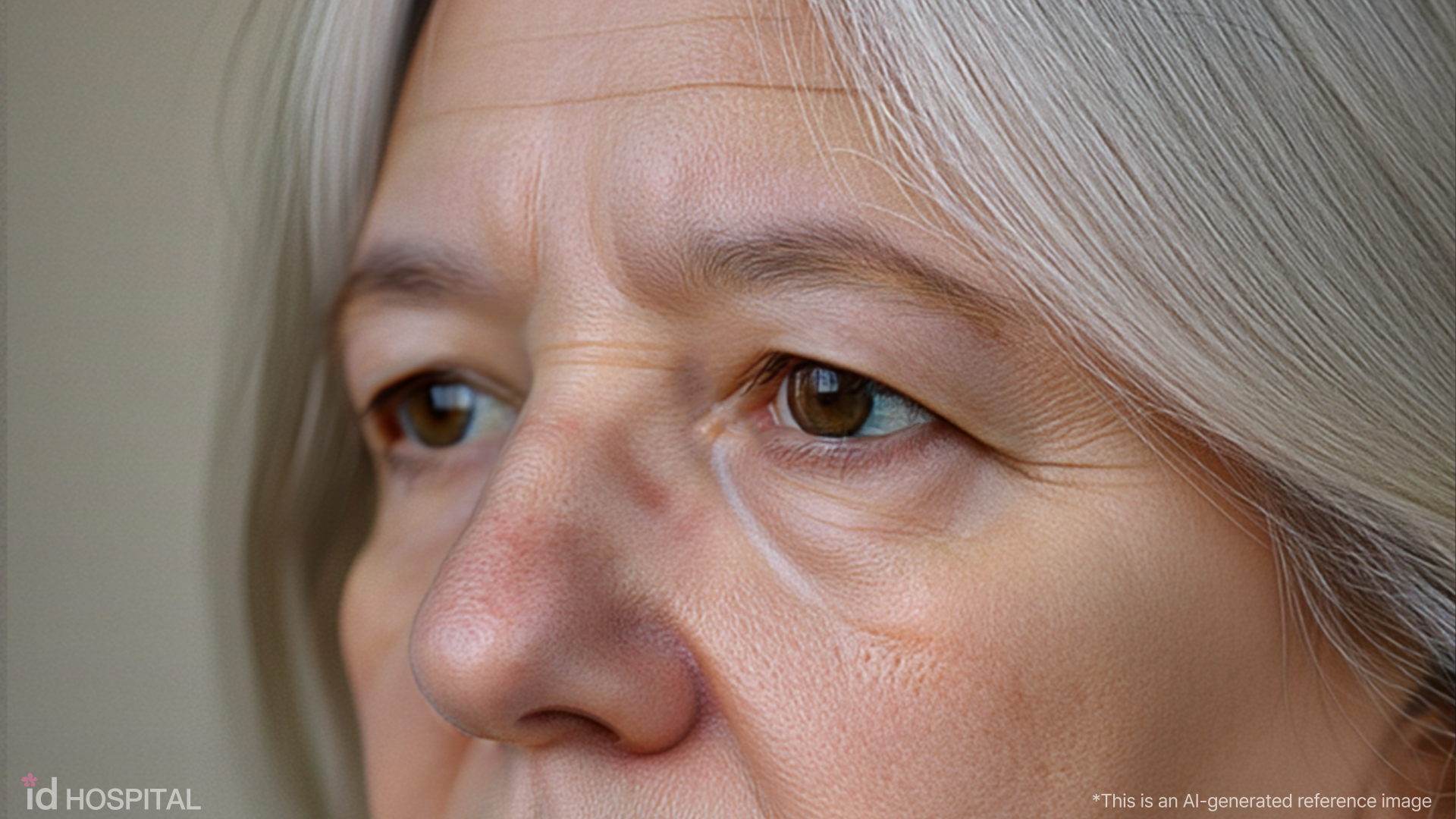
4. When eyelid and forehead aging occur together
Both the eyelids and the forehead tend to descend with aging.
Correcting the eyelids alone may refine the eye area, but can disrupt balance in the upper face.
→ Treating the eye–brow–forehead region as a single anatomical unit helps preserve natural proportions and long-term harmony.
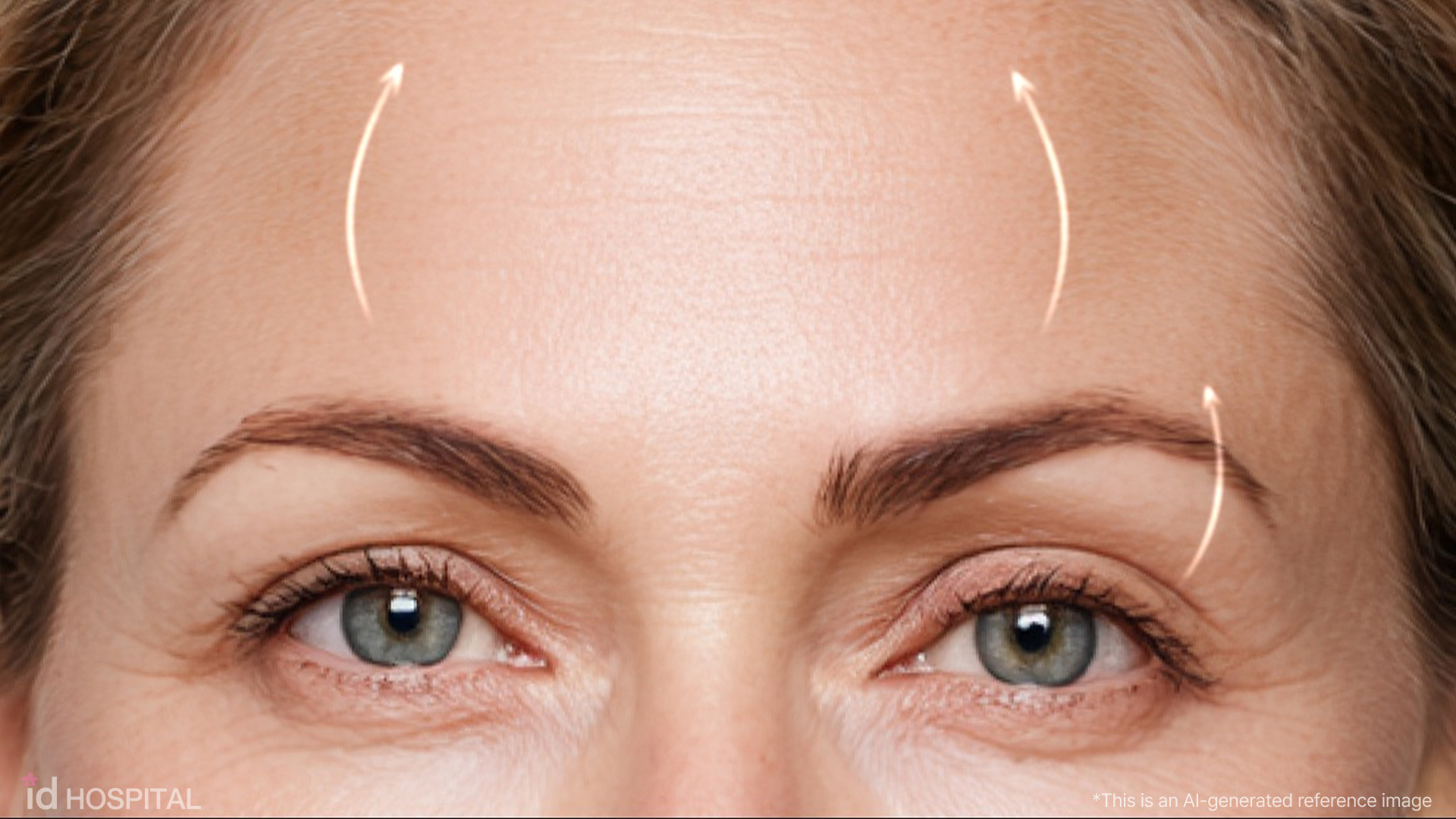
Benefits of Combining Upper Blepharoplasty with a Forehead Lift
Functional Improvement
Reducing brow descent decreases strain on the muscles responsible for opening the eyes and restores a more natural eye-opening mechanism.
Aesthetic Balance
Addressing both the eyelids and forehead together maintains balanced facial proportions and avoids an overcorrected or unnatural appearance.
Long-Term Stability
By correcting the underlying structural causes, combined treatment reduces the likelihood of recurrent heaviness and the need for revision surgery.
Hooded or heavy upper eyelids should not be evaluated based on the eyelids alone.
A comprehensive assessment of eyebrow position and forehead aging allows for a more accurate treatment plan—and is exactly why an integrated approach like the id Hooded Eye Lift can produce more stable, natural, and long-lasting outcomes.